Struggling with portraits? Take a masterclass with someone who truly knows their craft.
I recently joined a series of four-hour workshops with Adelaide-based artist Ignacio Rojas, whose teaching on the fundamentals of portraiture was both grounding and inspiring. The first session focused entirely on black and white, a perfect place to return to the essentials of tonal composition. The second explored portrait construction using just four colours — white, yellow ochre, cadmium red, and black.
Armed with what I learned from these two masterclasses (and my investment of time and money), I decided it was time to put the lessons into practice. After all, there’s little point in taking a masterclass if you don’t follow through. Practice doesn’t make perfect — but it does make you better. I hope the portraits I’ve painted since then show that growth.
I’ve shared them below in the order they were painted, so you can see the progression for yourself.
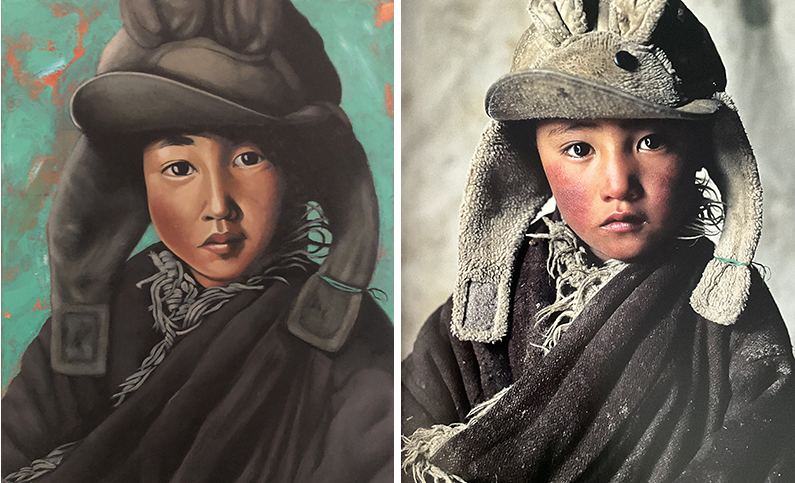
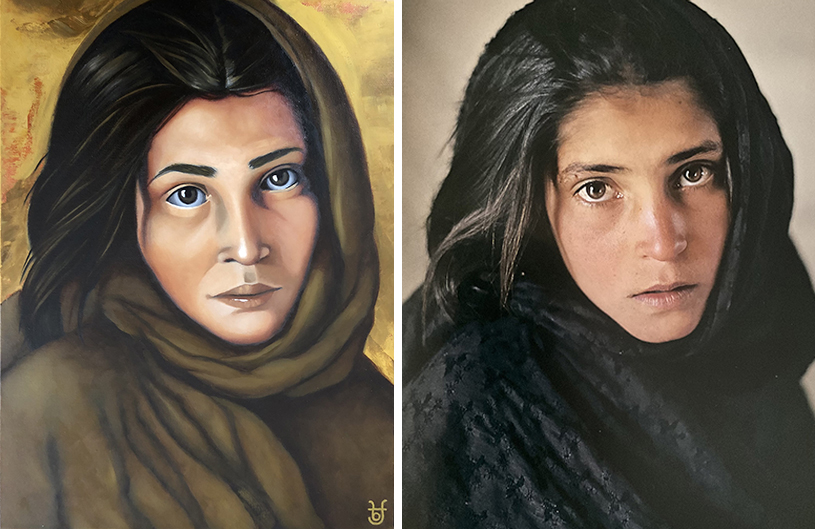
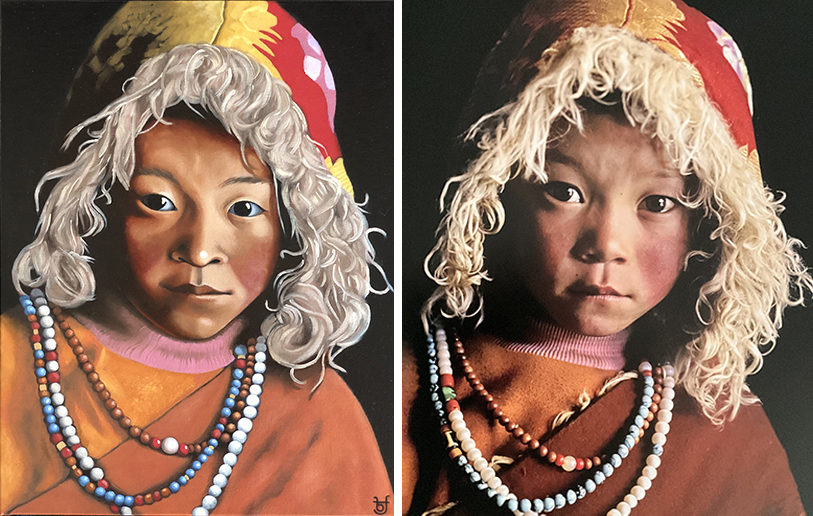
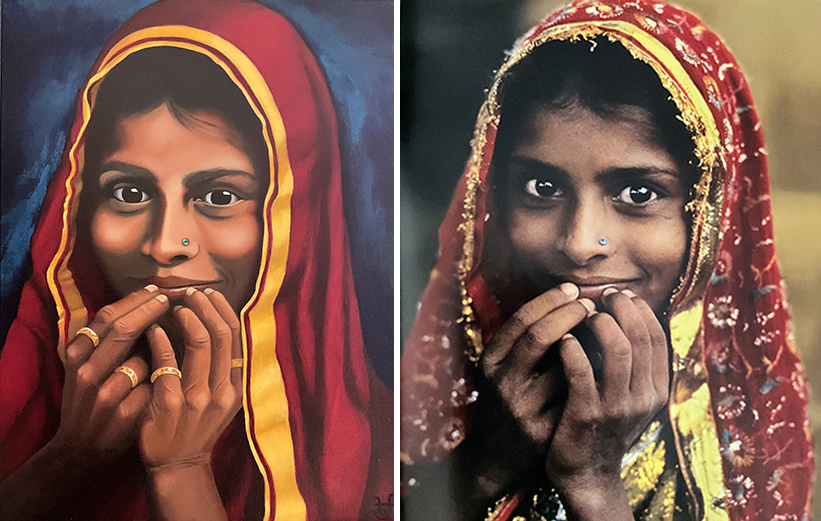
During Ignacio’s classes, we worked from photographs. Later, I came across a stunning book of portraits by Steve McCurry. His photographs, particularly of children, are deeply engaging because of one thing: the gaze. Each subject looks directly into the camera, meeting you, the viewer, with an intensity that captures something profoundly human.
That directness is, for me, the essence of portraiture. When the subject’s eyes meet yours, something happens; a quiet recognition, a moment of connection. Without that gaze, the point of a portrait can be lost.
In my own paintings, I don’t seek to replicate McCurry’s photographs exactly. Instead, I interpret them by adding my own sensibility, my brushwork, my choices of tone, texture, and colours. That’s the beauty of painting: the translation of another person’s reality through your own eyes.
Out of respect for his artistry, I reached out to Steve McCurry for permission to use his photographs as reference material. He granted it graciously; a generous reminder that art thrives through shared creativity. When artists inspire each other, the whole truly is greater than the sum of its parts.
So, here I share my latest portrait studies, the outcome of many hours of learning, experimenting, and refining my craft. I hope you enjoy looking at them as much as I’ve loved creating them.
I can empathise with your pain Frida! As an artist, the pain of repeated rejection is profoundly disheartening, yet it does not diminish my passion for painting, nor will I let it break my spirit. My love for art remains unwavering; to abandon this creative pursuit would be akin to the death of my soul. I was proud to submit my work to one of Australia’s most prestigious art competitions, the Sulman Prize. We artists continually harbor the hope of winning recognition for our lifelong dedication to both a personal and public cause. Such acknowledgment signifies our readiness and the worthiness of our art to be displayed and judged by both aficionados and the public.
However, when I learned the identity of this year’s Sulman Prize judge, my optimism waned. Familiarity with his work led me to believe my chances were slim, and indeed, I was not selected as a finalist. While this outcome was expected, I remain undeterred, as winning requires being part of the competition. I had heard that Art Prizes are a bit like a lottery, therefore participation is essential! Curiously, a simple post-it note with a shopping list was chosen as one of 40 finalists, a decision I cannot comprehend. I wish there were a Salon des Refusés for the Sulman Prize (as the Archibald has) where the true masterpieces, crafted with dedication and meticulous refinement, could be appreciated. To quote Salvador Dalí. “Have no fear of perfection, you’ll never reach it!” This sentiment resonates with us (artists), as we strive for more than just submitting a shopping list on a post-it note.
Recently, I had the privilege of viewing Frida Kahlo’s paintings up close at an exhibition at the Art Gallery of South Australia. The exhibition, focusing on Mexican contemporary artists prominently featured Frida Kahlo and Diego Rivera. Having studied Frida extensively through various biographies, I understood her deep self-expression through her art. However, seeing her brush strokes in person provided an entirely new perspective. Frida’s use of tiny brushes, typically associated with hyperrealism, achieved the naive style she is renowned for, and this was particularly striking. Her extensive body of work, over 200 pieces, is remarkable, especially considering her physical limitations. It is evident she spent most of her days seated (sometimes strapped to the chair) at her easel, reflecting on her imperfect physicality through her art. Every raw emotion she experienced was channelled onto the canvas, making her art a vessel for understanding her immense physical and emotional pain.
Frida’s approach in life, having faced death directly, was filled with an unmatched fervour to live fully and experience every moment? Her choice to wear flamboyant Tijuana skirts to disguise her polio-stricken leg and the brace that supported her body was a testament to her ingenuity by defying the conventional fashion of the times (1920’, 30’s). Externally, she was a stunning figure, determined by her bold fashion statements. Internally, her body was frail, but her spirit was indomitable. As a modern woman ahead of her time, Frida was bisexual, promiscuous, audacious, and resilient. She embraced her vulnerability while living in the shadow of her husband, Diego Rivera. All these aspects of her life she laid bare on the canvas, exposing her personal struggle through her art, and this is what gained her recognition as one of our greatest Surrealism painters of that era.
After her passing, Frida Kahlo became a phenomenon, a modern martyr born from her tragic existence and enduring suffering. Frida was physically broken by a trolley car accident at the age of 19, which left her maimed for life. She endured 32 spinal operations and ultimately faced the amputation of her leg below the knee due to complications from polio contracted in childhood. This final blow (at age 46) broke her spirit; despite maintaining an optimistic outlook for most of her life, she fell into a deep depression. It is suspected that she chose to end her own life. Her poignant final words, “I hope the exit is joyful and I hope never to return,” suggest she had reached the limits of her endurance.
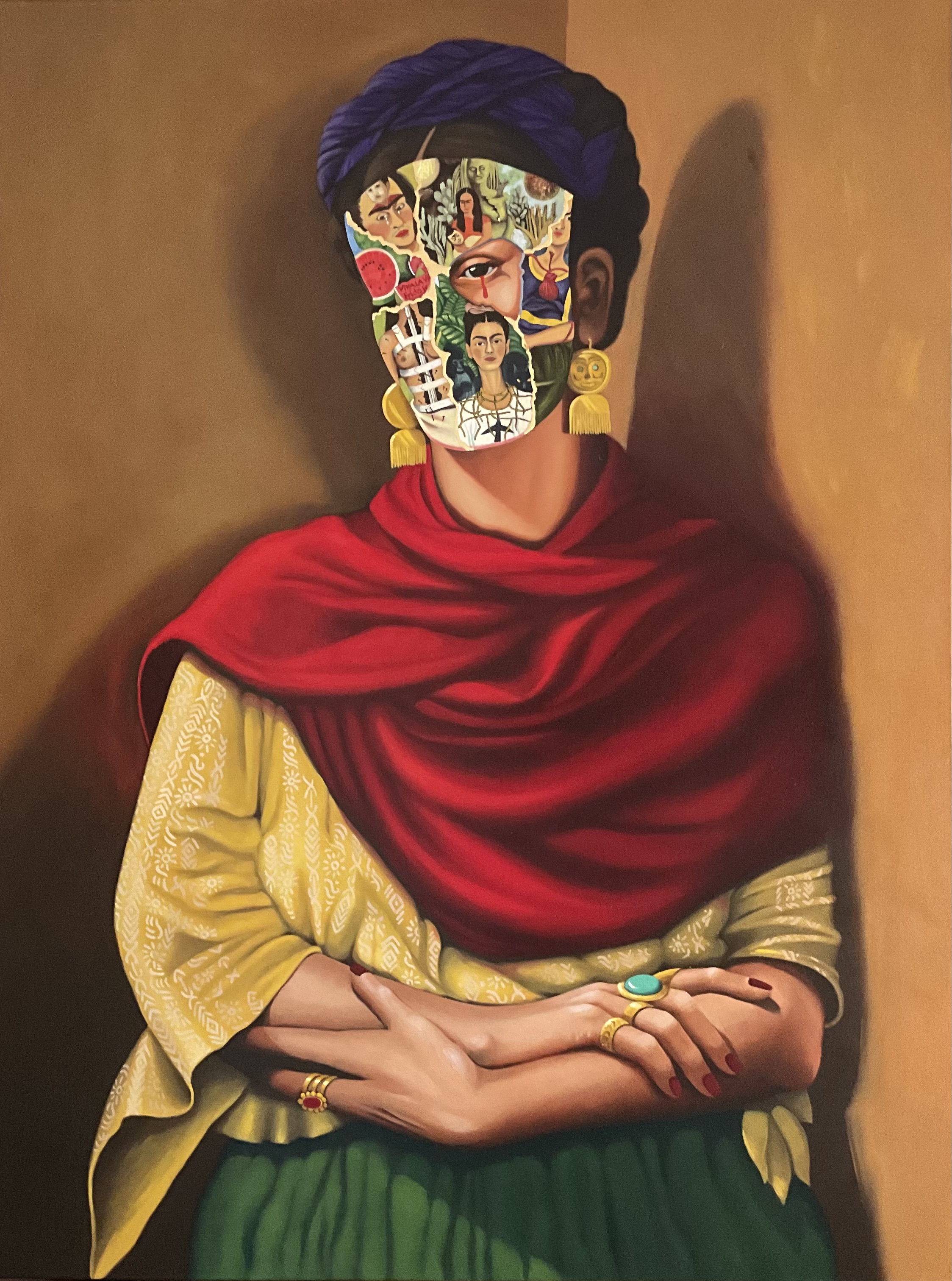
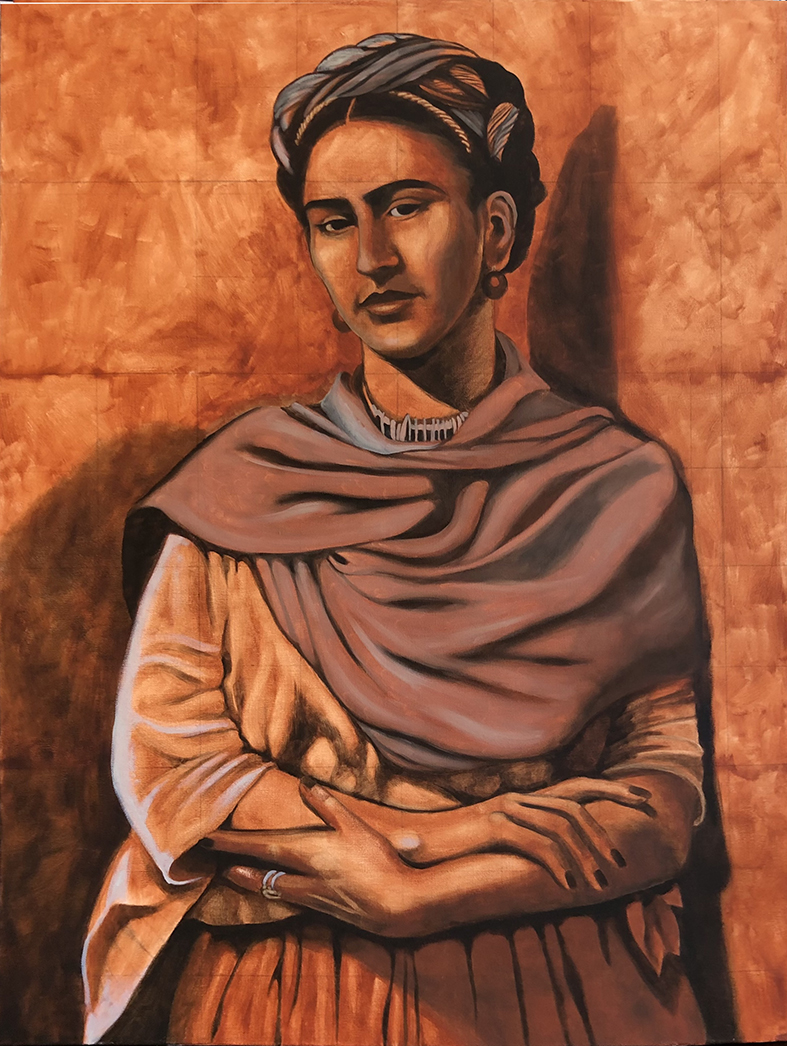
My deep fascination and research of Frida promoted me to invite her into my studio, through a portrait (of her). I was inspired by a photograph taken by her lover, Nikolas Murray, in which she looked stunning, as she often did in his staged studio photographs. She appeared very Mona Lisa-like, with a slight smirk and elegantly folded hands. This made me wonder if it was possible to capture the spirit of the deceased, to commune with her in some way through the act of a dedicated painting. And so, I promised Frida my best efforts and asked her if she would accompany me with the process – to become my muse.
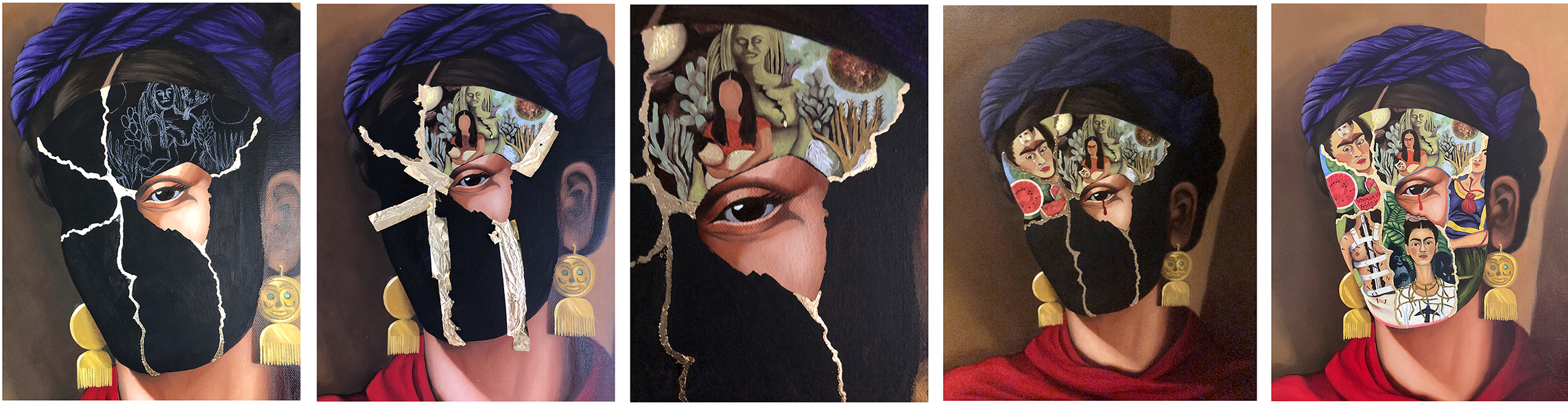
Everything proceeded smoothly until I reached her face. X-ray images of this painting will reveal at least five different renditions of Frida’s face beneath the final layer. The journey to creating this painting, representing a mended Frida, stemmed from what I initially perceived as a massive failure. Or perhaps, it was not! Frustrated and convinced that painting from a photograph was too difficult due to its lack of dimension, the idea of Kintsugi struck me. The concept of reconstructing Frida Kahlo through the Japanese art of Kintsugi came to me like a lightning bolt, even though it was a gradual and often frustrating process to arrive at that point—an experience that underscores why I love art. This method of embracing flaws and imperfections seemed the perfect approach to honour Frida’s brokenness.
In a bold move, I blacked out her entire face to start anew. To create distinct sections of her best paintings, I applied gold leaf cracks. This process involves using glue to adhere the gold leaf to the dedicated line, then brushing off the excess. As I brushed, the gold broke apart like gold dust, scattering across the entire painting. In that moment, I was struck by the poignant coincidence of Frida’s trolley accident, where she was found impaled on a pole, bloodied, and covered in gold dust—the spilled remains of another passenger’s gold paint pigment.
Recognizing the profound connection between my creative process and her life story I smirked with acknowledgment. Perhaps she was trying to teach me – to find my own voice, in recognition that portraits aren’t my thing – but masks are.
Whilst at the Academy of Fine Art in Florence, I undertook my first ‘site size’ portrait. Having always painted from photographs this is my first portrait done from a live model. It was a first also in that I had to draw with a paintbrush without having sketched her in charcoal onto the canvas first (which is how I normally work). Not only was I surprised at how easy it was, but also how accurately this can be accomplished with only the use of string for measuring, just as they did in the Renaissance era. The resemblance to the model was also uncanny and accurate. Yes I should have had her pose for the photo as per the portrait,…but you can see she was quite pleased.
{ TYCHE is the Greek goddess (or spirit) of fortune, chance, providence and fate. She was usually honoured in a more favourable light as Eutykhia, goddess of good fortune, luck, success and prosperity.}
To quote Picasso “there are two types of women, Goddesses and doormats”; I have referenced Tyche as an exemplar to depict my personal current status in the world.
It is therefore both ‘private’ and ‘public’, and has significant relevance to the life drawing class for which this is my proposal of work, and which fits the brief of developing a ‘private and public’ exhibition standard artwork.
As I stand triumphant on my plinth, conquering the doormat, I am imortalised as “the Goddess”, reclaiming my life through art. Like Tyche, I am blindfolded, hence not knowing where I am neccessarily going, but have blind faith in myself for that fact alone.
Alone indeed, my current need for solitude is proven through this large as life self portrait, painstakingly measured for accuracy and scaled up from an A4 photograph of myself in the proposed pose (albeit standing on a Dulux paint tin). The drawing is 2.5 metres tall, drawn with oil pit pencil on 300 gsm water colour paper. When I view it, I appear larger than in life! Perhaps this thing called art, is larger than I anticipated! In a state of continual inner dialogue, I have applied an existential approach to my life through the strong choices I have made and in particular over the period which is (now) growing into middle age.
The picture has been sexualised, as I am naked but for my painting apron (a befitting paradoxical approach to life drawing and domesticity) wearing high heels and earings, (which are a large part of who I am). I wear these ‘things’ which adorn greek coins as a symbol of money being attracted to me through my craft, therefore belief in what I am doing.
I stand defiant with my paint brushes in the stance of ‘liberty’. Finally I have returned!
Note: I acknowledge that this was created during the life drawing second year class, with tutor Chris Orchard from Adelaide Central School of Art.



 barbaraharkness.com