Struggling with portraits? Take a masterclass with someone who truly knows their craft.
I recently joined a series of four-hour workshops with Adelaide-based artist Ignacio Rojas, whose teaching on the fundamentals of portraiture was both grounding and inspiring. The first session focused entirely on black and white, a perfect place to return to the essentials of tonal composition. The second explored portrait construction using just four colours — white, yellow ochre, cadmium red, and black.
Armed with what I learned from these two masterclasses (and my investment of time and money), I decided it was time to put the lessons into practice. After all, there’s little point in taking a masterclass if you don’t follow through. Practice doesn’t make perfect — but it does make you better. I hope the portraits I’ve painted since then show that growth.
I’ve shared them below in the order they were painted, so you can see the progression for yourself.
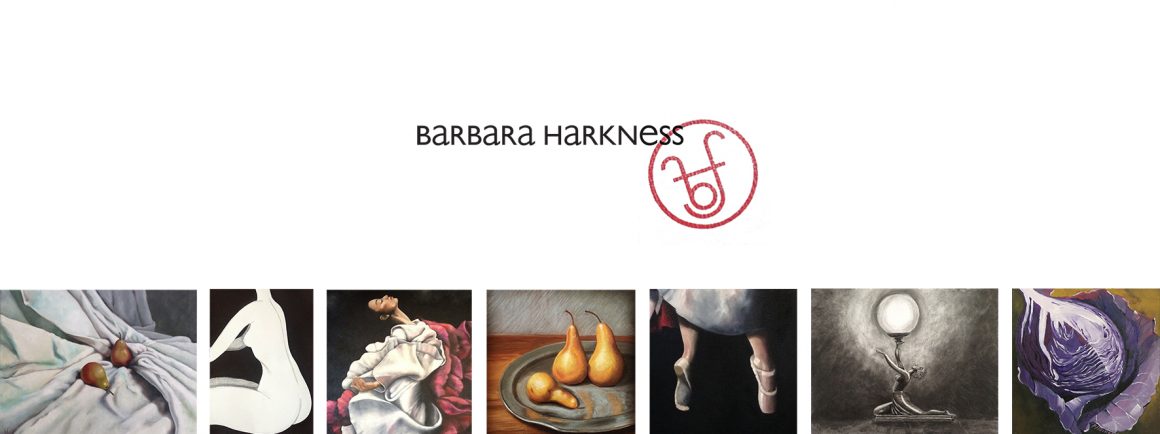
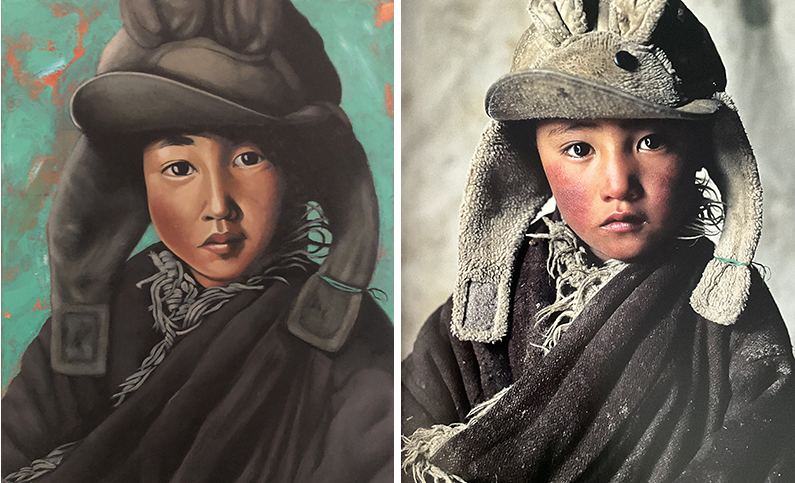
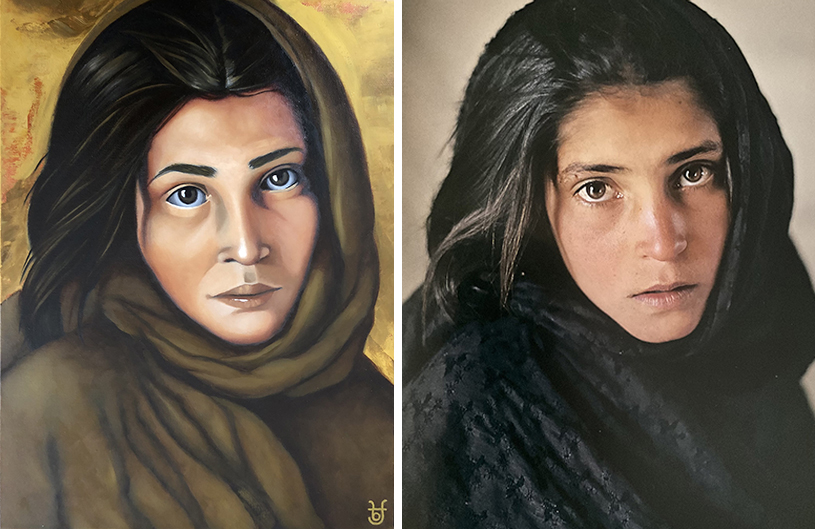
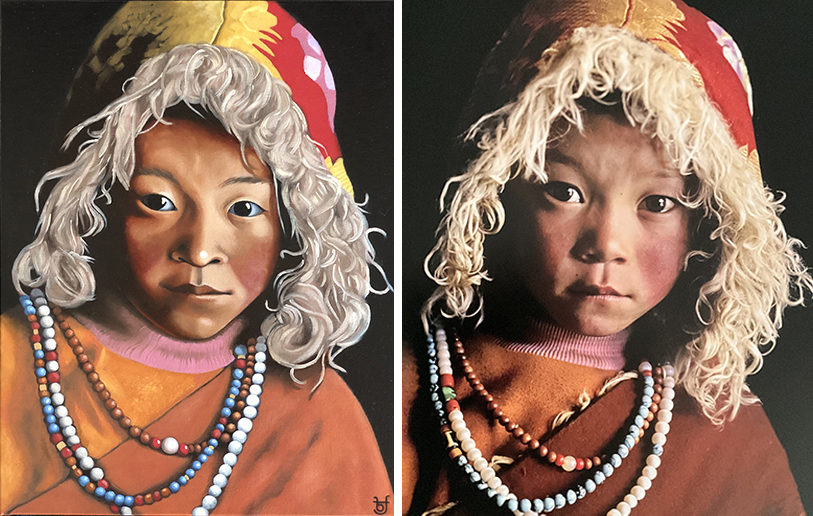
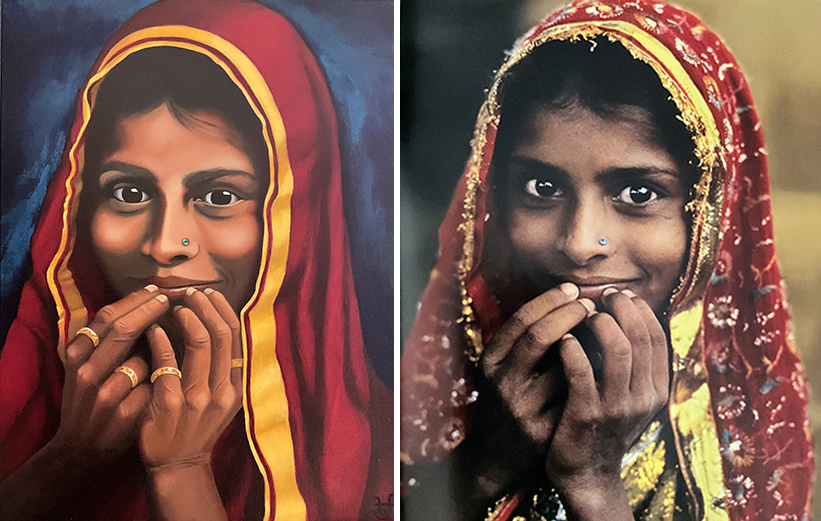
During Ignacio’s classes, we worked from photographs. Later, I came across a stunning book of portraits by Steve McCurry. His photographs, particularly of children, are deeply engaging because of one thing: the gaze. Each subject looks directly into the camera, meeting you, the viewer, with an intensity that captures something profoundly human.
That directness is, for me, the essence of portraiture. When the subject’s eyes meet yours, something happens; a quiet recognition, a moment of connection. Without that gaze, the point of a portrait can be lost.
In my own paintings, I don’t seek to replicate McCurry’s photographs exactly. Instead, I interpret them by adding my own sensibility, my brushwork, my choices of tone, texture, and colours. That’s the beauty of painting: the translation of another person’s reality through your own eyes.
Out of respect for his artistry, I reached out to Steve McCurry for permission to use his photographs as reference material. He granted it graciously; a generous reminder that art thrives through shared creativity. When artists inspire each other, the whole truly is greater than the sum of its parts.
So, here I share my latest portrait studies, the outcome of many hours of learning, experimenting, and refining my craft. I hope you enjoy looking at them as much as I’ve loved creating them.
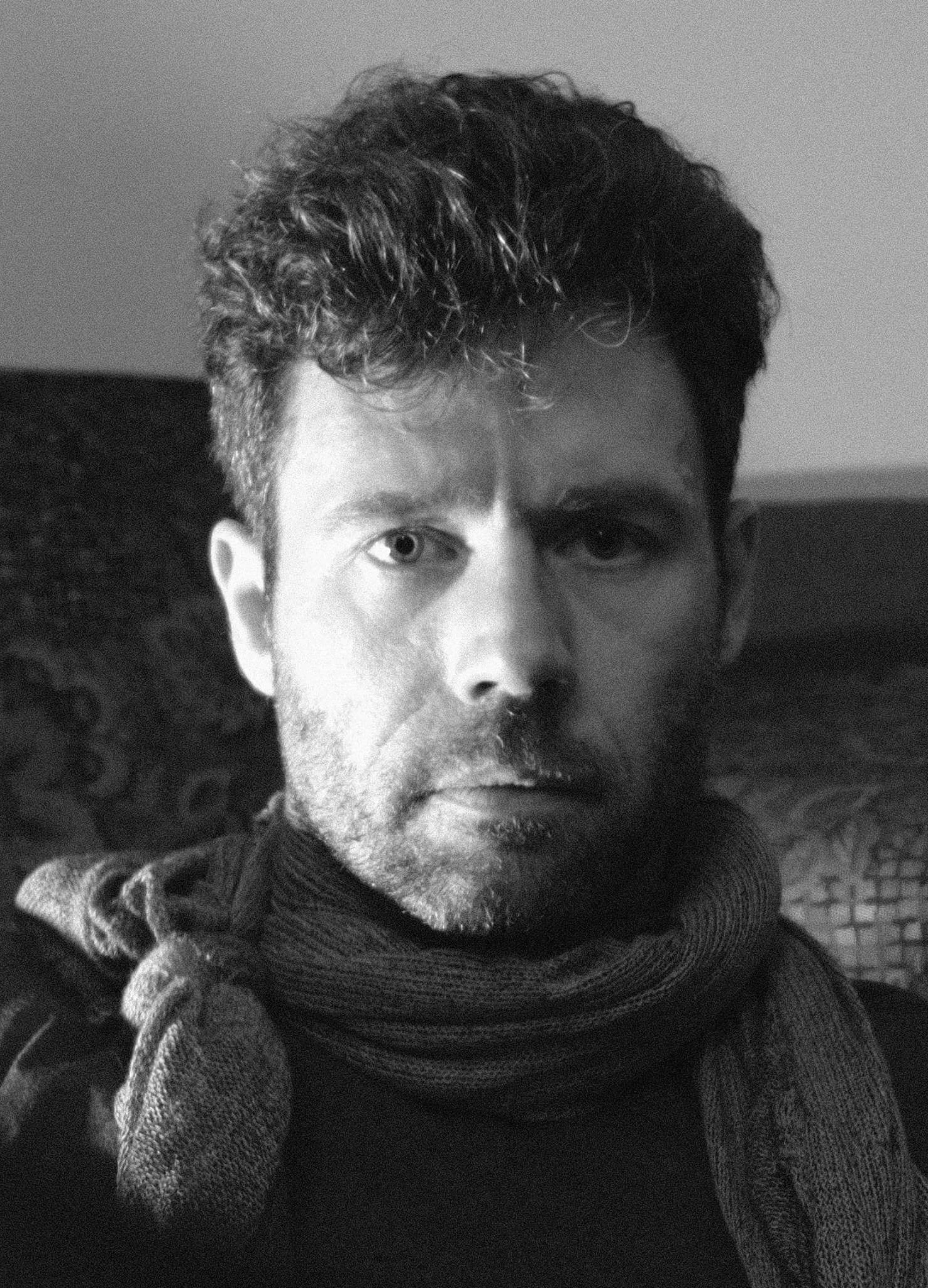
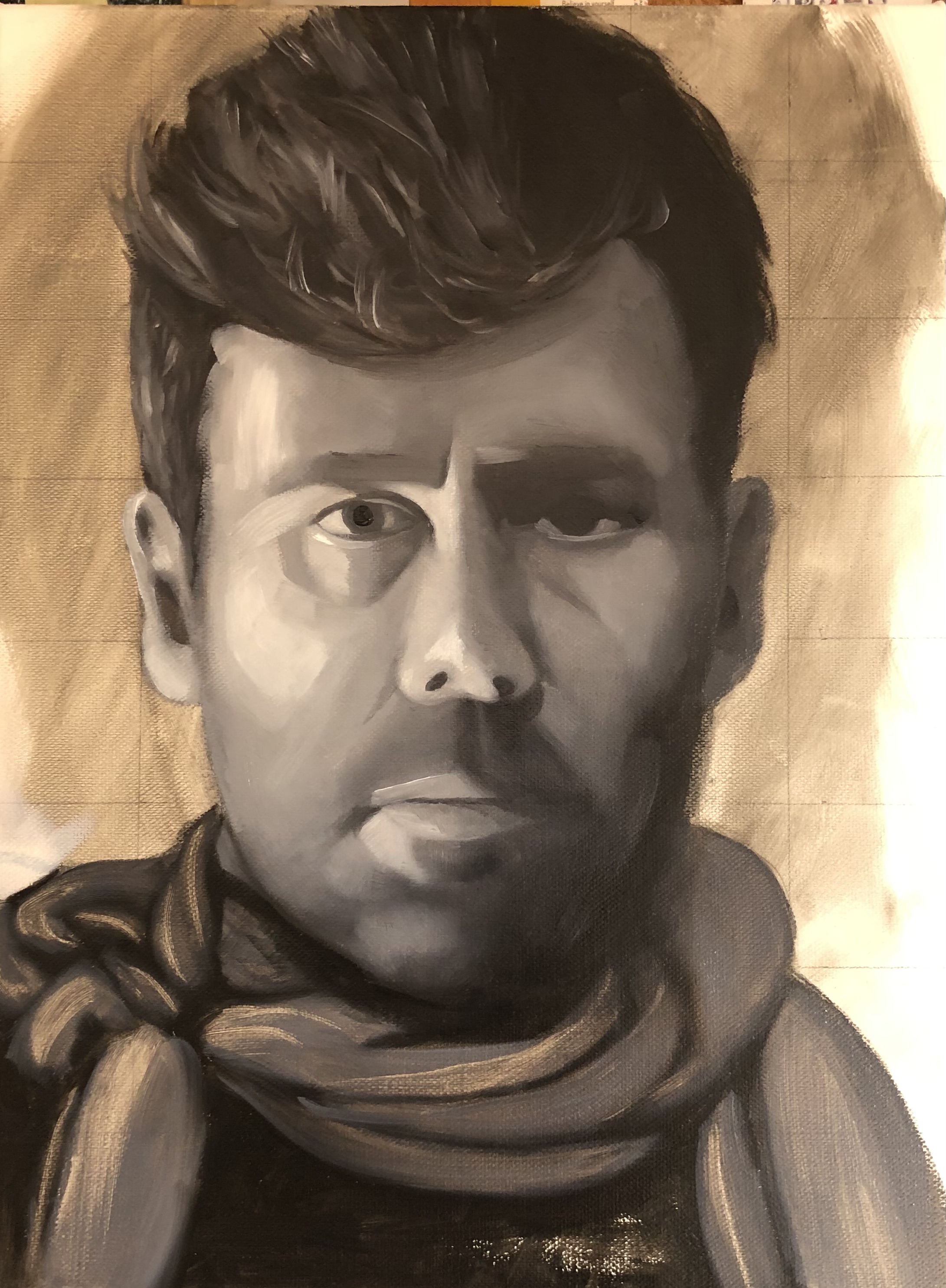
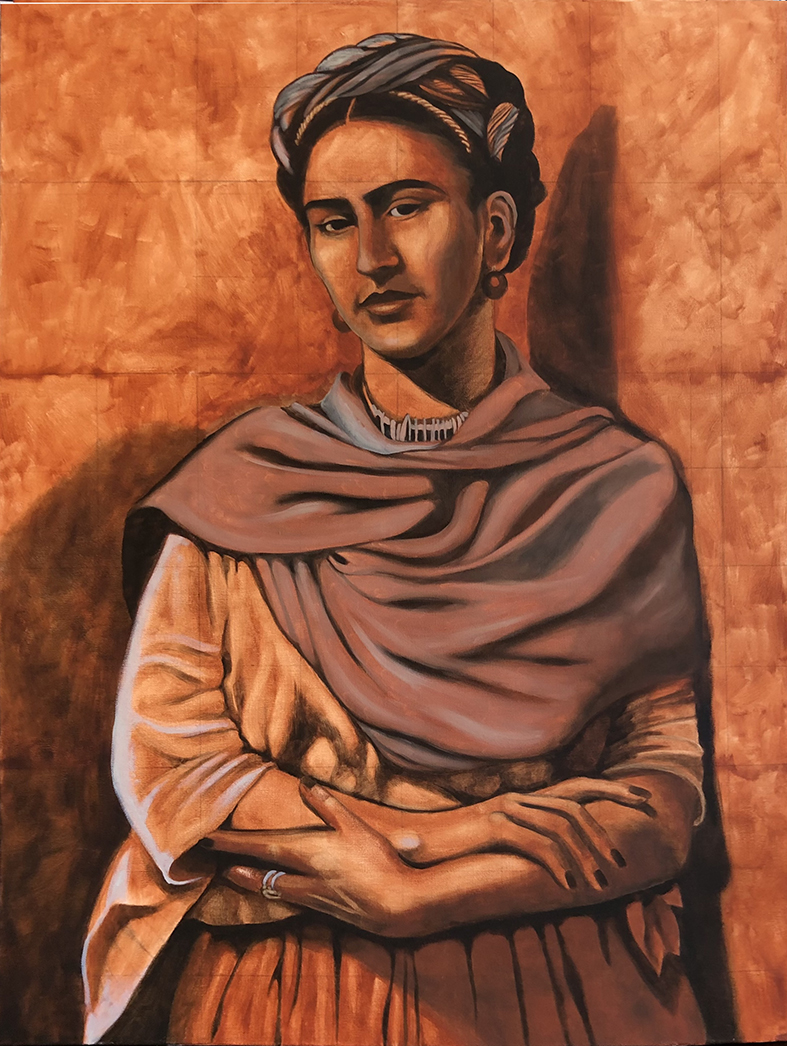
After my last attempt at portraiture—where my portrait of Frida Kahlo went through five reworks—I decided it was time to get back to basics. It also doesn’t hurt to learn from a master! Ignacio Rojas, an incredibly talented Adelaide artist, offers small, insightful classes at the Fullarton Community Centre Art Workshop. I recently attended one and created a painting of my son that I’m genuinely proud of.
In these classes, we paint from photographs. I started by sketching the face in charcoal to get the form right, ensuring the sketch was fixed to prevent it from bleeding into the paint. Then, we worked exclusively in black and white—a technique that’s particularly useful for me right now.
I tend to overwork my paintings in an effort to perfect them, so this process has been a lesson in restraint. The key to a good painting? Knowing when to step away. ABANDON… ABANDON… NOW!
I shall be taking his ‘limited palette’ class next year to learn more invaluable tips from this master artist.
I can empathise with your pain Frida! As an artist, the pain of repeated rejection is profoundly disheartening, yet it does not diminish my passion for painting, nor will I let it break my spirit. My love for art remains unwavering; to abandon this creative pursuit would be akin to the death of my soul. I was proud to submit my work to one of Australia’s most prestigious art competitions, the Sulman Prize. We artists continually harbor the hope of winning recognition for our lifelong dedication to both a personal and public cause. Such acknowledgment signifies our readiness and the worthiness of our art to be displayed and judged by both aficionados and the public.
However, when I learned the identity of this year’s Sulman Prize judge, my optimism waned. Familiarity with his work led me to believe my chances were slim, and indeed, I was not selected as a finalist. While this outcome was expected, I remain undeterred, as winning requires being part of the competition. I had heard that Art Prizes are a bit like a lottery, therefore participation is essential! Curiously, a simple post-it note with a shopping list was chosen as one of 40 finalists, a decision I cannot comprehend. I wish there were a Salon des Refusés for the Sulman Prize (as the Archibald has) where the true masterpieces, crafted with dedication and meticulous refinement, could be appreciated. To quote Salvador Dalí. “Have no fear of perfection, you’ll never reach it!” This sentiment resonates with us (artists), as we strive for more than just submitting a shopping list on a post-it note.
Recently, I had the privilege of viewing Frida Kahlo’s paintings up close at an exhibition at the Art Gallery of South Australia. The exhibition, focusing on Mexican contemporary artists prominently featured Frida Kahlo and Diego Rivera. Having studied Frida extensively through various biographies, I understood her deep self-expression through her art. However, seeing her brush strokes in person provided an entirely new perspective. Frida’s use of tiny brushes, typically associated with hyperrealism, achieved the naive style she is renowned for, and this was particularly striking. Her extensive body of work, over 200 pieces, is remarkable, especially considering her physical limitations. It is evident she spent most of her days seated (sometimes strapped to the chair) at her easel, reflecting on her imperfect physicality through her art. Every raw emotion she experienced was channelled onto the canvas, making her art a vessel for understanding her immense physical and emotional pain.
Frida’s approach in life, having faced death directly, was filled with an unmatched fervour to live fully and experience every moment? Her choice to wear flamboyant Tijuana skirts to disguise her polio-stricken leg and the brace that supported her body was a testament to her ingenuity by defying the conventional fashion of the times (1920’, 30’s). Externally, she was a stunning figure, determined by her bold fashion statements. Internally, her body was frail, but her spirit was indomitable. As a modern woman ahead of her time, Frida was bisexual, promiscuous, audacious, and resilient. She embraced her vulnerability while living in the shadow of her husband, Diego Rivera. All these aspects of her life she laid bare on the canvas, exposing her personal struggle through her art, and this is what gained her recognition as one of our greatest Surrealism painters of that era.
After her passing, Frida Kahlo became a phenomenon, a modern martyr born from her tragic existence and enduring suffering. Frida was physically broken by a trolley car accident at the age of 19, which left her maimed for life. She endured 32 spinal operations and ultimately faced the amputation of her leg below the knee due to complications from polio contracted in childhood. This final blow (at age 46) broke her spirit; despite maintaining an optimistic outlook for most of her life, she fell into a deep depression. It is suspected that she chose to end her own life. Her poignant final words, “I hope the exit is joyful and I hope never to return,” suggest she had reached the limits of her endurance.
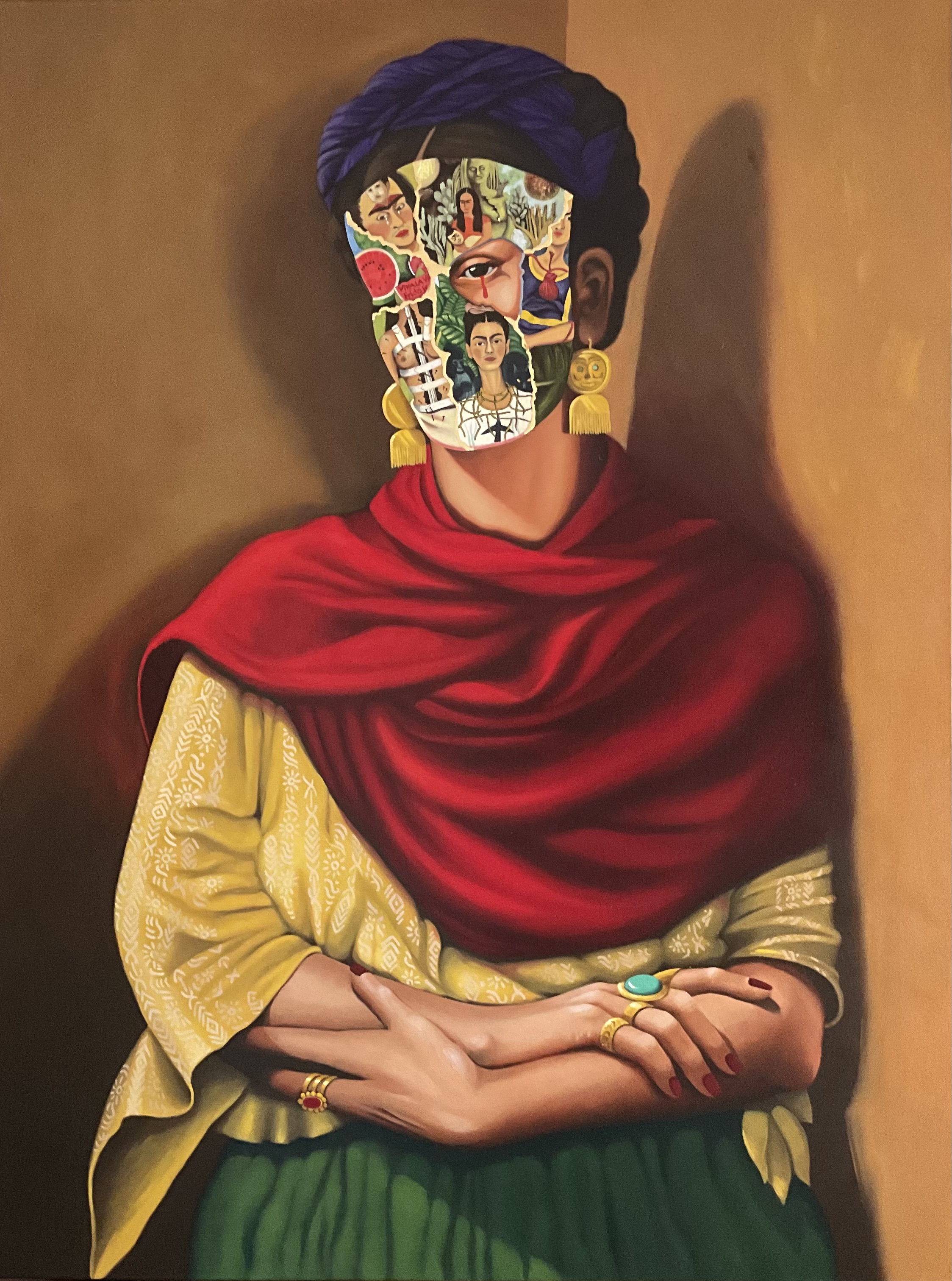
My deep fascination and research of Frida promoted me to invite her into my studio, through a portrait (of her). I was inspired by a photograph taken by her lover, Nikolas Murray, in which she looked stunning, as she often did in his staged studio photographs. She appeared very Mona Lisa-like, with a slight smirk and elegantly folded hands. This made me wonder if it was possible to capture the spirit of the deceased, to commune with her in some way through the act of a dedicated painting. And so, I promised Frida my best efforts and asked her if she would accompany me with the process – to become my muse.
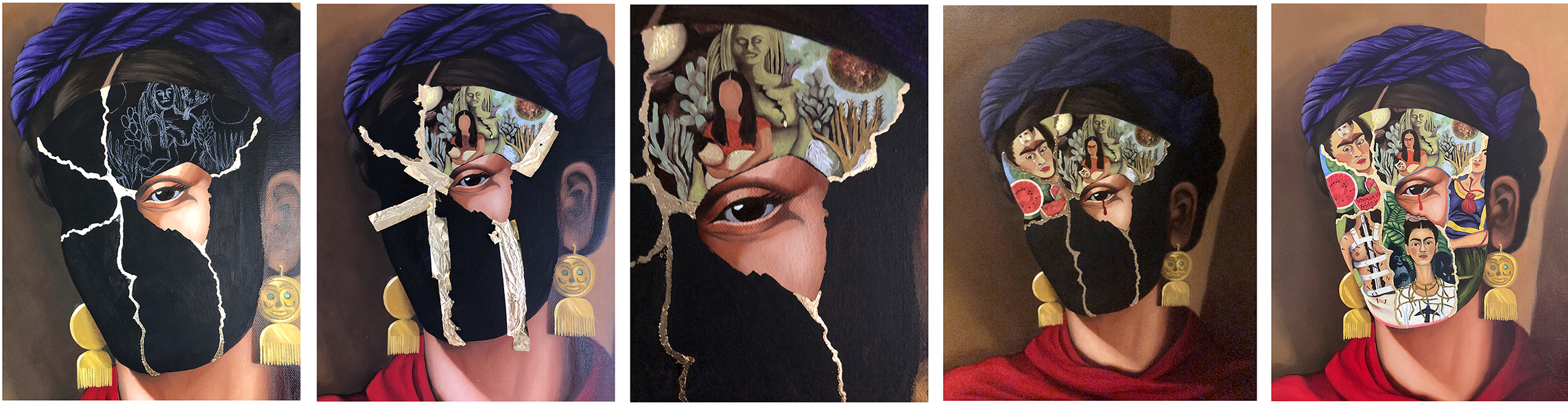
Everything proceeded smoothly until I reached her face. X-ray images of this painting will reveal at least five different renditions of Frida’s face beneath the final layer. The journey to creating this painting, representing a mended Frida, stemmed from what I initially perceived as a massive failure. Or perhaps, it was not! Frustrated and convinced that painting from a photograph was too difficult due to its lack of dimension, the idea of Kintsugi struck me. The concept of reconstructing Frida Kahlo through the Japanese art of Kintsugi came to me like a lightning bolt, even though it was a gradual and often frustrating process to arrive at that point—an experience that underscores why I love art. This method of embracing flaws and imperfections seemed the perfect approach to honour Frida’s brokenness.
In a bold move, I blacked out her entire face to start anew. To create distinct sections of her best paintings, I applied gold leaf cracks. This process involves using glue to adhere the gold leaf to the dedicated line, then brushing off the excess. As I brushed, the gold broke apart like gold dust, scattering across the entire painting. In that moment, I was struck by the poignant coincidence of Frida’s trolley accident, where she was found impaled on a pole, bloodied, and covered in gold dust—the spilled remains of another passenger’s gold paint pigment.
Recognizing the profound connection between my creative process and her life story I smirked with acknowledgment. Perhaps she was trying to teach me – to find my own voice, in recognition that portraits aren’t my thing – but masks are.
Is it a covenant, or a romantic notion? With divorce at an all time record high in history, why do we bother any more to ‘seal the deal’ and ‘tie the knot’. The latter quite possibly sums up what marriage does to relationship, puts a great big knot in it!
Does marriage breed complacency through the safety of knowing the ring is on, ownership aquired, he/she is MINE! Is this the beginning of the end? Should two people choose to commit to the covenant of marriage (inevitably a bloody long time) or simply reside under the same roof? Would couples be better off just living together until the novelty wears off, the lust dies down, and whatever is left over analysed for compatibility to endure a future together? Isn’t this what happens anyway?
Well this I do know, there is no recipe for a lasting marriage because the mix is always different. No marriage between two people could ever be compared to another for that very reason; the cocktail is always a very different concoction. From Bloody Mary’s, Harvey Wall Bangers and Screwdrivers, to Tom & Jerry’s, Orgasms, Sweet Dreams and Hanky Pankys. Life together is the elixer.
William Blake, the nineteenth century artist and poet during the Romantic period, wrote that “marriage was a form of unpaid prostitution and slavery”. I am sure that he was referring to his own wife in both contexts owing to her household and nuptial duties, however these days I am sure that the male in a marriage could indeed be the slave; to his job, and the financial toll of marriage, not to mention renovating and maintaining the home.
But there are rewards for the effort as well, for marriage is an institution. But I use the term endearingly in that it is usually for the creation of something larger than the individual; the sum of two parts being greater than one. It is a safety net for the clan, of building a home and life in which we instil values for children, share wonderful life events and create memories. When we enter a marriage we trust that our partner will honour the convenant. We trust that they will respect the bond of love which brought them together which in turn offers a natural and lasting fidelity along with home and financial security.
Marriage is also a commitment to establishing a network of friends, like minded individuals you can connect with to enhance your social life and create more wonderful memories. If you don’t have friends in your life together, and common interests, then the marriage runs the risk of becoming a vacuous black hole, which inevitably sucks the life out of each of you because of too much pressure to perform in all aspects of life (and relationship).
Whist marriage is the institution, relationship is the foundation, and if this is not right, then the marriage is doomed to crumble.
For me, marriage is TRUST, implicitly, and without it there is nothing!
T: Truth R: Respect U: Universality S: Security T: Tenacity
Having been around the block twice now (in the marriage stakes), I have come to the conclusion that I am a 10 year serial monogamist. I also think that this is a pretty good innings in today’s climate of exponential longevity. Both of my marriages were so different, almost to the point of being seasonal. For a reason and only a season. The first was to bear and raise children, and I chose a good man who was a good provider. Wise women will do that. The second marriage was to learn how to be on my own. I chose a good man once again, but he wanted to own me and become his chattel, much as William Blake had described. I eventually worked out the mistake / lesson, and made my own way, once again.
I have recently listened to Jane Fonda espouse the fact that it was not until she was 65 that she worked out how to be on her own – without a man. She left a perfectly good marriage as she describes it, so that she could just be her own person. In this day and age of so much choice, there is a growing movement towards ‘singledom’, which I feel describes where I am. But, and it is a big BUT, I still crave the idea of having a partner, not necessary a marriage, but a companion in life. And I feel that this is just a part of simply being human.
Curious about when ‘Marriage’ was invented, I came across this statement from my research: Most ancient societies needed a secure environment for the perpetuation of the species, a system of rules to handle the granting of property rights, and the protection of bloodlines, and the institution of marriage handled these needs. The earliest recorded marriage records go back to 2350 BC in ancient Mesopotamia.
I still respect the institution of marriage, for all the benefits it provides the family unit, which was precisely why it was invented. But it is not necessarily relevant for many people living individual lives.
As the author of this work I (Barbara Harkness) acknowledge the moral rights to the above have been asserted with the copyright, designs and patents act 1988. If you wish to use any of my material you may contact me for permission.
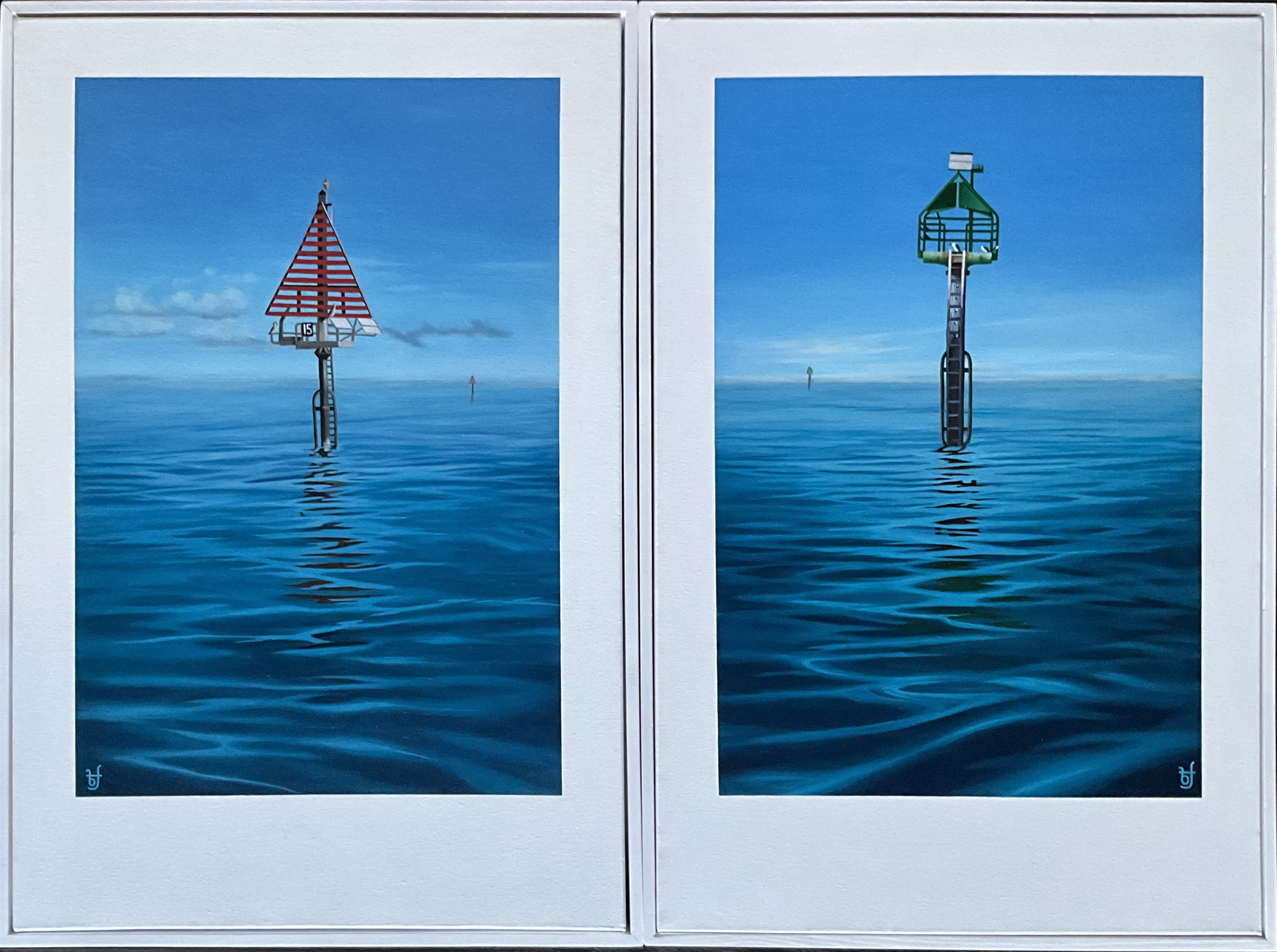
Chanel markers are made to stand out. Using a calm waters theme helps to put another perspective on the marker’s identification. I quite like the notion of them being a resting spot for seabirds whilst on their journeys, a-catch-your-breath cafe for gulls.
As the author of this work I (Barbara Harkness) acknowledge the moral rights to the above have been asserted with the copyright, designs and patents act 1988. If you wish to use any of my material you may contact me for permission.
The year is 1995… before the lightening quick fixes of ‘emails’. This is a love story, told via the intimate communication of ‘letters’ between Barbara and Michael, who seemed destined to meet for the gifts of spiritual awakening they arouse in each other. Even though they live on opposite sides of the planet, they embark on an emotional journey of love, sacrifice and sexual alchemy. Told via their letters to each other, accompanied with short sojourns to the physical realm in various exotic locations; Paris, Bordeaux, London, Cote-d’Azur, Adelaide and San Francisco. Their relationship would endure the tyranny of separation because of their deep bond forged at a sublimely intimate inner level. Can their relationship really transcend the covenants they placed upon each other, for it to ‘go the distance’ in the world of everyday reality Private or public? Vulnerability or voyeurism? Either way, the book is a glimpse into the power of Love via the power of the written word. Some would say ‘too much information’ but, if you believe in the power of extraordinary relationships, then this book is for you.
Available in full colour print format or digital Kindle – from Amazon, black and white print and digital colour from Barnes & Noble, Apple Books, Smashwords, Baker & Taylor.
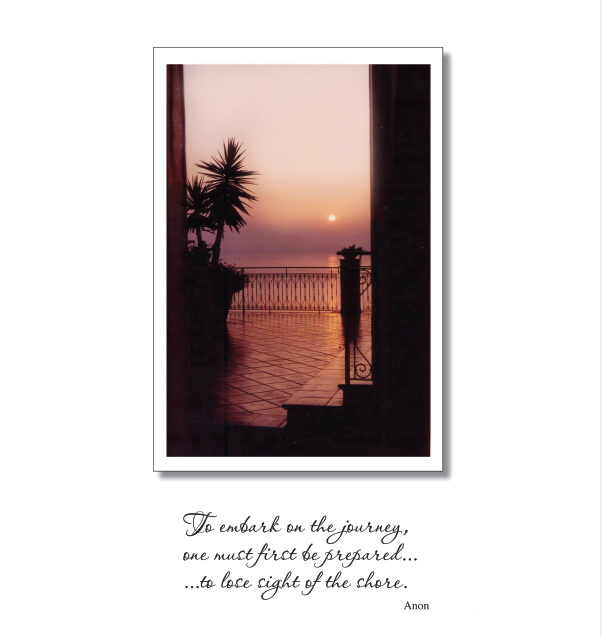
On any given day we can be blindsided! Personal tragedy can strike and we are all too suddenly reminded of our mortality! But to watch the sun rise over the ocean with the promise of a new day is to reflect on and be grateful for all we have right now. To watch the sun rise anywhere is akin to being reborn every day. A sunrise can be dramatic, like a curtain slowly revealing the main act, a drama we are unaware of just how it will unfold. Each sunrise is intrinsically different than the last, with no promise of anything better either! Lest the notion of enjoying the present moment for what it is. At the beginning of any new day there is a sombre darkness – like the dark night of the soul. Then the brilliance of the sun appearing is the balm that nature provides us with, and a realisation that we live in a stunningly beautiful world. Pertinent to these uncertain times is the knowledge that anything can change…and quickly, another reminder to appreciate all we have which is good and bright in life.
These are the capturing’s of my early mornings spent in Northern New South Wales on various beach locations: Bogangar, Casuarina, Tallows, Kings Cliff, Cabarita and Lennox heads and at varying times, witnessing the sun rise.In 2019 I spent time caring for my ex-husband Bob, who was blindsided with a brain tumour and given 8 weeks to live. I promised myself I would watch the sun rise everyday,… and I did. As I witnessed the sun rise, I also watched someone I loved slip away from existence. This was a poignant reminder to appreciate the ‘right now’ and ‘the given day’ ahead of me. The experience was profoundly life changing.
Xmas 2019 was spent with my youngest son Max in Sydney. It was the best Xmas I’d had in a long time. Not one for all the commercialism and tinsel waste that accompanies the tradition, we booked a counter lunch at the local deli. We dined on Oysters, fresh leg ham, and roast Porchetta with crackling on a bed of Cauliflower puree. We exchanged cards with words of gratitude from and to each other, in acknowledgement of what had happend personally that year. His father had passed away.
At this time, a large portion of Australia was on fire. South Eastern Australia was quite literally hell on earth; as unprecedented weather conditions on the driest continent on earth finally responded with the largest climate change catastrophe the world had ever seen. And watch they did, in horror, as hundreds of fires ravaged the countryside and burnt the drought stricken tinder dry landscape to a crisp.
The generosity from people all over the world was equal to their horror, as movie stars donated stunning amounts of money for the recovery mission. Nicole Kidman, Bette Middler, Pink, Kylie and Danni Minogue all gave generous financial gifts of $500,000. Chris Hemsworth and Sir Elton John donated $1,000,000 each. Corporations got on board, musicians held events and handed over proceeds, sports stars auctioned their personal items, working and playing for free to raise funds, to help in the only way they could – through generosity. And the world felt the pain of our suffering too, the kind spiritedness and empathy shown by other nations was heartening.
19 million hectares of bush perished, an ‘estimated’ one billion animals died and some endangered species maybe driven to extinction, 5,790 buildings destroyed, (2,700 were family homes), 31 lives lost, and our air quality (previously once the most pristine) was suddenly recording the worst pollution levels in the world. Mother nature was certainly reacting, and climate change was well and truly in our face and on our plate, to deal with. No one was denying this, as our nation faced the worst catastrophe and mass evacuations since World War two! The army reserves were put to good use to evacuate the stranded folk on holiday from the beaches, and fire fighters from around the globe were dispatched to assist our own tired and weary, battle scarred men and women. Nature is a hard beast to fight! The realisation was sinking in that this was probably just the beginning of how we would face our future if we kept going in the direction we were; profit over planet. How we lived our lives needed to be reconsidered, and FAST!
From Sydney, we then travelled to Canberra for a fleeting visit (owing to the worsening bush fires) to the National Gallery to view Picasso and Matisse, who had come to town. However the air was becoming thicker with smoke and it had become increasingly hard to see twenty feet in front of you. This was frightening to say the least, as we drove back to Sydney through the thick blanket of red fog, not knowing how close the fires were to us. We just knew the South Coast was not a good place to be as the fires worsened and encroached upon the holiday towns. We didnt want to get stuck in a massive car evacuation either so we cut our Canberra visit short and owing to the air quality in Sydney we flew back to South Australia to see in the New Year. We were not exempt from the fires at home either, but the air was marginally clearer owing to the size of the ones happening here.
We are all observers of life; our own and others. We observe inaction, reaction, mediocrity, melodrama, injustice,…. you get the picture. My investigations through Art, was teaching me how to observe not only the visual aspects of the physical world, but also how to portray the hidden qualities of humankind.
This was my response to what was happening in the world. The very evidential effects of climate change and the fires I was witnessing in my own country. The images in the media of the massive smoke plumes, blood red skies, fire tornadoes creating their own weather patterns…it felt like Armageddon had arrived!
At the time I started the painting in February 2020, the world also entered into the COVID-19 pandemic and the Collective Community was commencing an international shutdown.
Whilst the original intention of the emerging painting was to depict mankind’s effect on the planet from an environmental perspective, this was enhanced as the months played out and the painting became progressively more complicated. It was an automated response to what was happening in the real world.
My ouvre is still that of the ‘unseen’. The man covering his eyes in shame; representing mankind’s unwillingness to acknowledge the impact we have made upon the earth. Let’s not look at the obvious, but suffer the consequences as a result. He is mankind and he is also G.O.D. A catastrophe is unfolding all around: the ramifications of destruction, darkness and death obliterate the whole canvas, whilst a deliberate space of plain black canvas at the bottom right corner represents the nothingness which might remain, should we keep going on this trajectory of man made destruction. This is our own fault, and now nature is responding with fire and disease, for we had become too greedy with our consumerism and treatment of our home – Gaia. We have for too long been complacent in our attitude toward nature. The writing has been on the wall for a long time.
I worked in a different way this time, which was totally automated and without an original sketch, I pulled the idea from my imagination through what I was feeling about the current state of destruction happening globally; both invisible and tangible. As I painted the swirling smoke upon the canvas, ghouls appeared, and so I pulled them out and made them more obvious. As the year progressed so did COVID-19 and it became our worst collective nightmare. I placed death in the left hand corner because I can remember feeling very frightened by what felt like the end of the world. And I wondered why we didn’t take heed from these very realistic creative movies, which depicted our very worst potential outcomes.
2020 really was the year from hell, and this was how it looked and felt to me.
The painting took six months to complete. Have to say, I’m really over black paint! And I’m really over COVID!
As the author of this work I (Barbara Harkness) acknowledge the moral rights to the above have been asserted with the copyright, designs and patents act 1988.
If you wish to use any of my material you may contact me for permission.
I believe that the environment we live in affects our ability to create. Therefore sometimes it is necessary to create the environment first. Well, this is what works for me, and is why it has taken five years to complete the environment for creativity to fully blossom. The environment I talk of is mostly exterior and therefore visual, however there is a flow through to the interior environment as a result of having a suitable space to work from. The renovations to the studio were in fact completed in 2015, but the renovation to my life was still a work in progress.
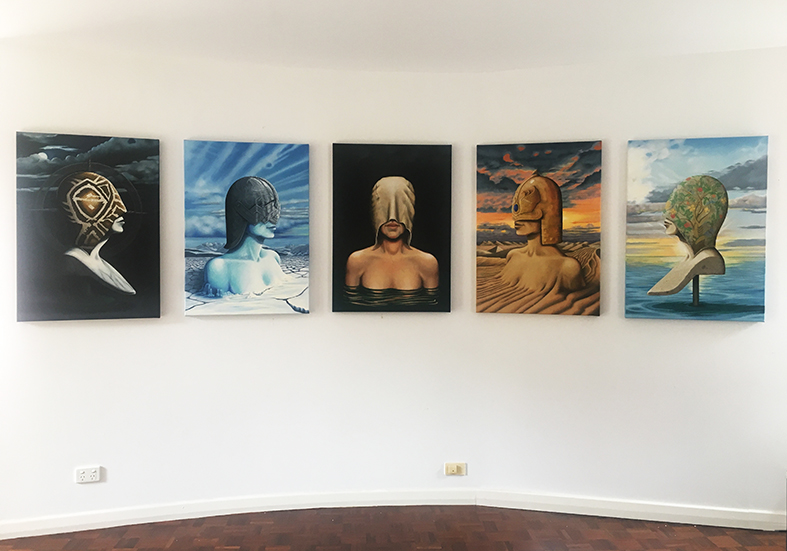
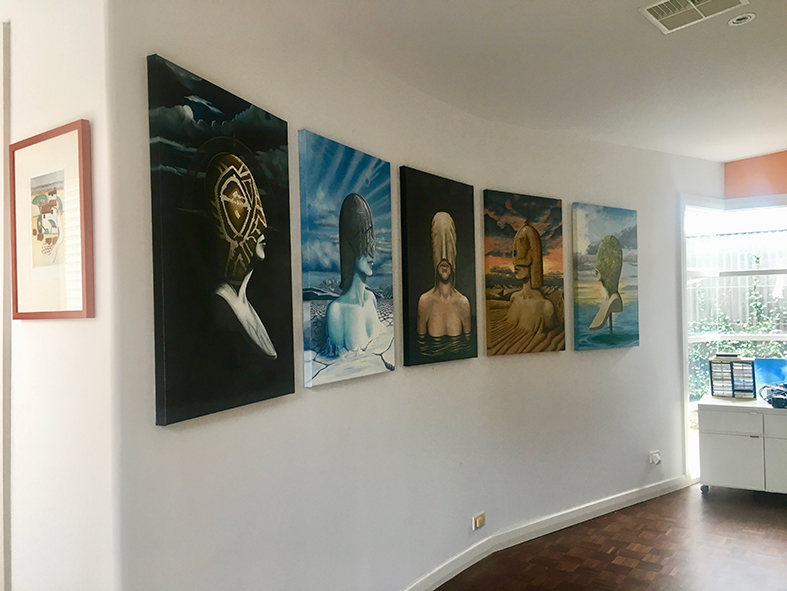
Last weekend I finally “hung” my body of work from the recently completed and final year of an Arts degree (Bachelor of Visual Art), onto the walls of my studio. Interestingly (as you can see) there are no body’s, and the portraits wear headgear reminiscent of a death mask. I started with only two portraits and ended up doing five, and ironic that in the end they all fitted so perfectly onto this funny curved wall which is the main hanging space in the studio. It was as if I had somehow subconsciously painted these portraits to suit my studio; the middle one of me emerging from the dark, smack bang in the middle and the others facing inward, surrounding me in support.
Titled ‘The Immortal Soul’, this recently completed body of work explores my life experiences and spiritual beliefs. Through a combination of mythological, psychological and symbolic imagery, these paintings reflect facets of my persona. The sequence of five paintings is structured around the idea of personality archetypes as defined by Carl Jung and depicted through the language of surrealism. The masked aspect is symbolic of death. Through the executioners hood I reflect on my existential approach to life and how I have reinvented myself many times over. The hoods therefore speak of endings and new beginnings. All the portraits of the archetypes explore the concept that humans have two basic natures, the physical and the spiritual. They represent psychic intuition: the unseen inner life, which guides me in the physical world.
When I stood back and looked at my work, I was reminded of the quote by T.S Elliot, ” we shall not cease from exploring, and at the end of our exploring will be to arrive and know the place for the first time”. Even though I was born with this gift, I felt a sense accomplishment, I was amazed (that I could do this), and they made me feel worthy. These paintings define me right now, but in five-ten years better paintings will define me, and THAT is the power of self discovery through ART.
HAIL ART!……long may it live (after the resurrection)!
I am not a hyper realist artist, and nor do I wish to be. However this is my attempt at painting in the hyper realism style, created through a master class workshop at The Art Academy (Adelaide based art school run by Robin Eley). What I wanted to achieve from the workshop was knowledge about form, and how this is created through tone and colour, and also mixing skin tone from the correct palette. We all painted the same painting from a photo, so I don’t know the woman (left side in case it isn’t obvious!)
Robin Eley is a generous teacher who happily shares his knowledge, and mastery of paint technique with a class of roughly thirty people, over a five day intensive workshop. He’s also a super cool dude who is living the dream as a successful artist in Los Angeles. I think it is quite safe to say that he still calls Australia home, and shall return to our fare shores once he has made his mark on the world. Other notable Adelaide artists such as Tsering Hannaford also teach at The Academy. The next up coming workshop is in January next year with David Jon Kassan and Shana Levesen. I highly recommend the Academy for those artists who wish to develop their painting technique. I thoroughly enjoyed the experience and the camaraderie gained by meeting other like minded souls.












 barbaraharkness.com